Mental Health

Guest Post: An ongoing battle with an eating disorder in today's world by Guest Author

  I remember it vividly.  I was at my friend’s birthday party and decided I wasn’t going to eat meat anymore. A small decision that would have a huge impact on my life. Most of my childhood, I was the bigger kid in class and so one day I decided to change. It started with cutting out meat, then that led to cutting out chocolate and then anything that wasn’t too sugary or didn’t have a nutrition label. At the time I was 14 and food seemed like the one thing I could control in my life. I stopped letting my mom make me breakfast, used smaller utensils and dishes to eat less and kept up with my exercise routine. My eighth grade year was awful, I remember bringing a yogurt and pineapple to school everyday and isolating myself at lunch so people wouldn’t see me eat.

Sara in her childhood years

 Getting through high school and learning how to binge

  Flash forward to the middle of ninth grade, I had lost probably 20 pounds, but I still wasn’t happy. During soccer practice one day, I made myself throw up so I could go home. Everyone thought I was sick but in reality my brain was the only part of me that was sick. Once I realized that I could make myself throw up, the year and a half of starving myself caught up with me in a big way. I started binging on anything and everything I could, waiting until my parents went to sleep to begin devouring everything in sight. After stuffing myself so full, the only thing I wanted to do was make that feeling go away.  So I would make myself sick. This went on most of high school, and I continuously lost more and more weight, but it was never enough. By sophomore year in college, I was 113 pounds, binging daily on anything that I wouldn’t normally eat and running 5+ miles a day to ensure I didn’t gain weight (mind you, I started my “weight loss” at 168 pounds).

 Finally reaching out for help

  That year I finally opened up to my mom and told her that I had a problem, my family gave me the ultimatum to go get help or to be cut off. I chose to go to therapy and worked with a therapist throughout the next two years of college. By the end of college I had gotten my shit somewhat together, however I was still so unhappy with my body. I had gained weight (approximately 20 pounds) and was trying to navigate how to eat normally again. For so long, I had no hunger cues and felt perpetually hungry.  

Sara in her young adult years

 How it has effected my adult life

In 2016, I had just started my career in the Army and told myself, yet again that I would be this disease once and for all. I got up to my highest weight but was still so disgusted by the body in the mirror. For 9 months in 2017, I had my longest streak of sobriety, but as soon as life felt out of control again I was right back where I started.  The last three years have felt like a flash, and I’m still here fighting but each day I get a little stronger.

  Having an eating disorder is something I wouldn’t wish on my worst enemy. Unlike other addictions, you have to eat to live, it’s not just something you can avoid. During every social event, holiday, night out, breakfast, lunch and dinner I have to make the decision to eat, to not restrict and no matter how guilty I feel after, I have to make the decision to not make myself sick.  Getting help is something I wish I had done sooner because even now at 26, I struggle daily to make healthy decisions for myself. The control and the pain I cause myself are the addictive parts of this disorder, it’s never just about the food. Throughout the last 13 years, I was never “sick enough.” I didn’t fit the stereotypical look of the skinny girl that looked like the wind could blow her over.

Sara's transformation photos

 Taking the steps to a “normal”, healthy life

  I have had to take my recovery day by day for over 3 years and I have slipped up more times than I care to admit.  But my experience goes to show that no matter how someone appears, they might be hiding behind a mask distracting the world from ever really knowing what mental struggles they battle in their head on a daily basis. I am complicated, emotional, and generally all over the place, but every day I’m working towards getting my life back. I don’t know if I will ever be completely free, but I do know that I will continue to fight this war inside my mind every day. Deciding to cut out meat, turned into anorexia, which turned into bulimia and changed the course of my life forever.

  For 13 years bulimia has plagued my life, and although it is a big part of me, it is not who I am or who I want to be. My eating disorder took some many things from me and continues to do so today. Isolation, anger, depression, anxiety, and a forever sinking feeling consumed me. I lost my menstrual cycle for 7 years, causing who knows how much damage to my reproductive system. Knowing that you may never have children because of what you did to yourself is probably the hardest pill to swallow. With that being said, each New Years I tell myself that I’m done with bulimia and every birthday I start over again.

 Eating disorders in today’s society

  In today’s world, getting help is something that most people struggle to do because of the stigma surrounding mental illnesses and eating disorders. Those people who desperately need help suffer in silence because they’ve been conditioned to believe that asking for help makes a person weak. The symptoms listed in the DSM that allow doctors to make diagnoses for patients are incredibly outdated and only chip away at the tip of the iceberg. There are so many types of eating disorders: bulimia, orthorexia, anorexia, binge eating disorder and many others that I don’t know off the top of my head but the worst part is this disease not discriminate based on gender, age or weight.

Notes from Okami & Co.

It’s difficult struggling with something as important as food. As Sara stated, you need food to live, so it’s not something you can just fix overnight. Having struggled with body image dysmorphia, I can relate to Sara’s journey of long nights of starvation, binging and purging, and excessively working out. It’s tough on your mental game, and it does require therapy to get through it. Just because someone looks “normal,” doesn’t mean they aren’t struggling. The biggest hurdle people may have that look normal is convincing someone they have a problem that they need help with. If you have any concern with your eating patterns and nutrition, please reach out for help.
53628805_404110277040424_7158320983202332672_n.jpg

About our Guest Author

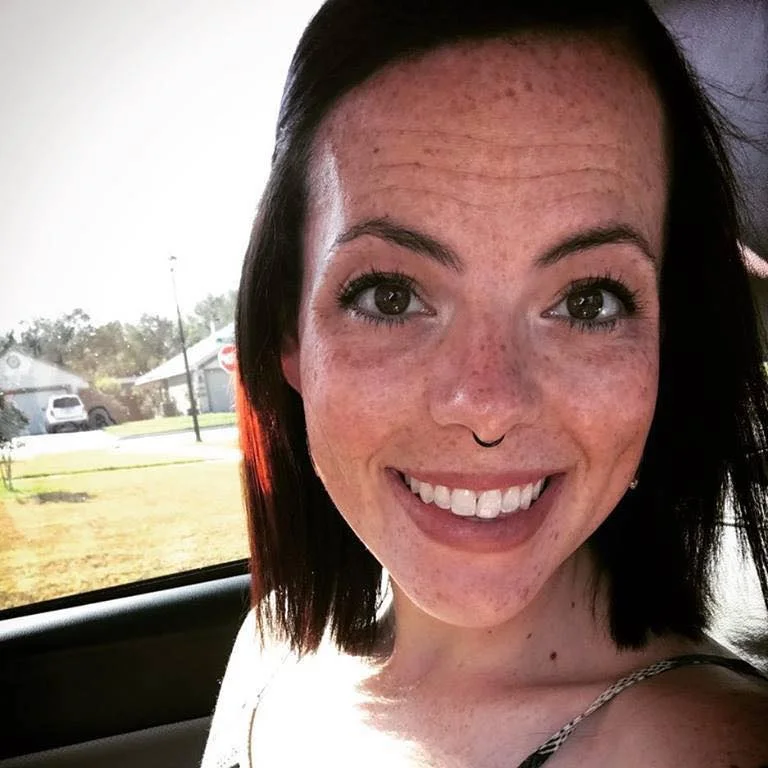
Sara C. is a friend from high school, whom I’ve had the opportunity of attending military training with back in college. We reconnected through Facebook, and I reached out to her to share her story. She advocates for mental health through her Instagram showing her mental health journey and fitness journey. She is an officer in the United States Military. She is continuously striving to find balance in her mental and physical health while cheering on others to do the same. Follow her journey on her blog www.saraswayforward.com.

Guest Post: Talking about Mental Health with ‘Traditional’ Parents by Guest Author

“As long as I am working and able to send money back home, I am fine”, my mom said. She is a first-generation immigrant who has been living in Canada for over 30 years. This was her response to talking about recent life stressors including money, family and work. Like other parental figures, my mother has this one traditional-like belief about mental wellness. Namely, “If you are physically okay, you don’t need to get checked”

What if you parents are traditional and don't believe in mental illness?

I do not think that this mindset always comes from an uncaring individual. I think there is so much more to this statement than what there is at face value.

For some, I think about the places where people were brought up. In some countries, privatization makes healthcare inaccessible. This is true for those who are not able to pay out of pocket. So, for treatments like cognitive behavioral therapy or a cocktail of anti-psychotics, these are not readily available options for the marginalized.

Even if they were, some cultures teach how mental illnesses are evil spirits to be removed by a ceremony. Or there is also the understanding that a ‘physical’ problem must be treated with a ‘physical’ treatment and the same goes for a mental illness. Therefore, a tumor in the breast can be treated with surgery, chemotherapy and radiation. However, with a mental illness, medications like antidepressants or mood stabilizers are not readily accepted. If parents such as mine were open to talking about mental health treatments, they would be looking more at psychotherapy or support groups.

There is also the perception of mental illnesses being easily treated – by just changing a mindset. It goes back to the idea that if a person is not bringing harm to others, nor are they at risk of anything, they are ‘okay’. I know that when I was in elementary and secondary school from the early 2000s, mental illnesses were never discussed. There was little to no education about what they were and how you could support others who are diagnosed with one. It is only recently, where there are more awareness campaigns and initiatives to legitimatize the perception of mental illnesses.

Unfortunately, with ‘positive’ publicity also comes ‘negative’ ones. Often, my parents and I see stories in the social media of violent acts of murder and suicide. When there is word of mental illness, there comes misguided generalizations. Some prejudice statements I have heard include ALL people with mental illness(es) are violent, manipulative, attention-seeking and overly emotional human beings. In fact, I have also heard people say that if you talk about suicide with others, they are more likely to kill themselves. The reasoning for this statement was that you had ‘planted’ the idea in their mind, otherwise they would have never thought of it.

They do not have to agree with you, but keeping them aware of what you are going through will hopefully help minimize the risk of distancing.png

Talking about mental illnesses within families, are difficult. Though there are times where I wish my mom would be able to understand how I see mental illnesses, I know there are a lot of barriers to her understanding it. Even when I persist in talking about them with her, there are a few things I try to keep in mind.

  1. The goal is not to change how they think about mental illness. If you do happen to accomplish this, think of it as a bonus. Strive to have them accept and respect your own perception of mental illness. They do not have to agree with you, but keeping them aware of what you are going through will hopefully help minimize the risk of distancing.

  2. Focus on how you feel about the situation, NOT on how they are reacting. Sometimes it is easier for a person to support another when they feel like they are not being blamed or put at fault for something beyond their control.

  3. Accept that not everyone is open-minded. My mom will probably never think of depression or anxiety as family issues we should be concerned with. She will probably still call suicide as one having a ‘crazy idea’. The most we can do is just look out for one another and respect that we are different.

Having the conversation about mental illness is not something comfortable to talk about – especially with parents like my mom. But it is better to have one, whenever it may be, than to be silent about it.


In Uncertainty Comes Hardship, but in Hardships Comes Certainty by Jaclyn Sison

     My life as Kat began as a question, “who am I really?”  At such a young age, I never expected to find the answer would be that I was adopted and that my last name was not my own.  I had come to this realization after I found a videotape titled “Sergy” in a large antique cabinet in my living room.  I was not prepared for the content it contained.  It was a little boy with blonde hair and blue eyes, just like mine, begging the audience, “please take me to America to be with my sister Katya.”  I had discovered that I had another family somewhere else in the world that I knew nothing about.  As a result, my journey of becoming one with abandonment fears had begun.

     Over the course of a crucial few years, I asked my parents to tell me everything about this boy.  I was angry.  I was hurt.  But most of all, I felt betrayed as I learned the truth.  I was adopted from Domodedovo, Russia when I was 2 years old.  No other information about my biological family was given to me because my American adoptive parents did not know any.  They told me that Russia, at the time, had provided little to no information.  It wasn’t like the adoption system in the United States.  There were no pictures, no contact information, and no medical history.  At the time, Russia was different.  Poverty-stricken where most people were unable to take care of their own children.

A secret revealed through a video

  I did not believe my American parents.  In my mind, I didn’t even know who my parents were or what they looked like.  I wanted to know where certain personality traits came from and who else shared my physical features in my biological family.  Most of all, I wanted to know why I wasn’t wanted.  But life carried on, with me drowning in depression and anxiety.

I maintained a bitter mindset, constantly resenting and blaming my adoptive family for what they had done.

     I had always wanted to be accepted.  Who doesn’t?  It is a natural human need to find others who will accept them for who they are.  But finding out I had been lied to made it harder to trust anyone that was around me.  It was easier for my American brother, even though he was also adopted from Ekaterinburg, Russia.  He did not have the same fears that I had with people.  For me, I would establish friendships and let them fall apart because I knew that they would leave me or they did not want me just like my biological family in Russia.  I refused to let myself get to close to others and realized how vulnerable I was when I did.

  I was a mess when I would lose friends.  I did not understand the subconscious self-sabotage that I had done to destroy the relationship.  I was always told that I was “hard to deal with” or “too clingy.”  I constantly lived my life in fear that I would end up alone.  I accepted this as the truth to my life.  As I got older, I did not have many friends.  I saw everyone around me as fake.  I maintained a bitter mindset, constantly resenting and blaming my adoptive family for what they had done.  For years, I carried this burden alone.  I had been searching for answers since that day I found that tape.  I trusted no one and never had a genuine relationship where I felt that they would stay.  That is — until 2 years ago.

There is not a day that goes by that I don’t count my blessings of just how far I have come personally, emotionally, and spiritually..png

     I thought about my biological Russian family every single day and hoped one day we would find each other.  On Facebook, I received a message from a stranger asking if I was related to my adoptive brother.  I was hesitant to respond, but she told me that she helped him find his biological family— after reading this I must admit that I quite literally laughed out loud.  I responded to her that I had been searching for my family for years and I would be shocked if she could find them. I honestly thought it was a scam, but I played along anyway, curious to see what would happen.  First, I joined a Facebook group called “Russian Adoptees.”  Then, I gave her my Russian last name, brother’s name, birthdate, and birthplace.  In retrospect, I realize I was making a bold move.  Within two minutes, I received a message that contained a VK account and a positive note that read, “here you are.  I am positive this is your brother because he has been looking for you too.”

I was certain it was the Sergy from the videotape all those years ago!

  I clicked the link that showed a male that would have been my brother’s age and someone who looked just like me.  After getting in touch with him, and asking a series of questions that only my sibling would know, we Facetimed each other.  I was certain it was the Sergy from the videotape all those years ago!  My biological brother!  I even met my biological mother and finally asked her the questions that I had been saving for years.

     I am now 27 years old, and I feel like a door to that struggle has been closed.  I still have questions, but I have received so many answers that have helped change my views on my abandonment. I still keep people at an arm’s length when I first meet them, but I no longer think that they will abandon me.  I see it as an encounter that has given me insight and helps me carry on my journey in life.  Now, I believe we meet everyone for a reason.  A notion I never would have believed if I hadn’t met that person over Facebook.  There is not a day that goes by that I don’t count my blessings of just how far I have come personally, emotionally, and spiritually.  While being adopted had its problems, from it, I am able to see the world in a different way than many from behind my blue eyes.

A note from Okami & Co.

  You can imagine the amount of questions we had after reading Kat’s story.  After speaking with her a little bit more, we learned that Kat has stayed in contact with her biological family, and has grown to understand the reasoning behind the secret that her adoptive parents kept from her.  Often, we don’t see the bigger picture that everyone else sees.  Kat learned that her adoptive parents were just trying to protect her from the things that were happening back in her hometown of Russia with her mother.

  Kat is now a writer of two blogs Transcending Thoughts and Kat’s Korner.  She writes books, short stories, blogs, and poems.  Kat is currently working on a book about The Invisible String that connected her to her Russian family for all those lost years.  Born into imagination, creativity is her best friend.  Writing raw and emotional posts, she challenges others to embrace new perspectives while encouraging everyone to take this journey with her.  You can find more of her work in the links below!

Transcending Thoughts Facebook page: Www.facebook.com/theantisocialxtrovert

Transcending Thoughts Official Website: Www.naturesofthinking.blogspot.com

Kat’s Korner Facebook Page: Www.facebook.com/KatsOfficialKorner

Kat’s Korner Official website: Www.katskornerofficial.com

Instagrams: @katsofficialkorner and @theantisocialxtrovert

The Destructiveness of Overbearing Positivity in Today's Culture by Jaclyn Sison

The Problem with Positivity

“Just look on the bright side. There’s always a rainbow after the rain.”

  If I had a penny for every time I heard that or something remotely close to it, then I’d have a pretty fat wad of cash stashed away in a nest egg.  It isn’t unusual to hear positive, motivational quotes when you’re stuck in a rut.  That’s pretty much how we’re programmed as a community to respond to negative energy.  Society tells us that positive thinking is what will make the hard times easier.  I feel like we’ve been brainwashed to think that happy thoughts can somehow make you fly away from your troubles.  But this isn’t Peter Pan, and there is no Neverland.  This is real life, and real life can suck.

Off to Neverland with Peter Pan

  I’m speaking mostly from personal experience and from my conversations with friends, families, and patients alike…  Being told that “things could be worse” or “you just need to be more positive” can actually make it worse.

  There was a study led by Joanna Wood from the University of Waterloo in Canada, where people would repeat the mantra of “I am a lovable person” sixteen times, and would then take a survey to see how they felt afterwards.  The study resulted in those with normal to high self-esteem felt better after the task, and those with low self-esteem felt worse.  Eh? How does that make any sense?

  Well, If I feel like I’m an undeserving individual trying to convince myself otherwise, I end up with me feeling even worse about myself.  It’s only because I’d think that I wasn’t normal like everyone else who had a positive outcome chanting that little mantra.  This is what happens most of the time when I try to think positively about myself or my situations.  My thoughts are engulfed with uncertainties, deficiencies, and worst-case scenarios, making it very difficult to convince myself that I am worth it.   

Read: Joanne Wood’s Positive Self Statements: Power for Some, Peril for Others study

  It’s already difficult enough to gather the courage to reach out for help when we’ve reached a breaking point.  Now just imagine reaching that point and having someone actually respond to you that it could be worse, or that your attitude is the reason that you feel this way.  IT SUCKS.  Not only have you belittled our problems and our feelings, you’ve told us that it’s our fault we feel this way.  It’s not that we want to be unhappy, it’s that we can’t even though we’ve tried.  Trust me when I say, we’ve tried.

Tina Fey, "You need to cool it."

  Just imagine that you’re fighting with your significant other, and the first five words that leave their mouth during the heat of an argument is, “you need to calm down.”  How often do you think someone calms down after being told that?  Not often at all.  Because you’re experiencing your emotion.  It’s the same concept for trying to cheer up your friends.  You may have good intentions in trying to lighten their mood, but how effective do you think it is?  Probably not very effective.

They just love Eeyore anyways

  When I first read this image on Facebook, I was happy that someone could draw this conclusion from a children’s series.  This is from Winnie the Pooh.  We all have seen the theories that every character in Winnie the Pooh represents some form of mental illness, whether it’s anxiety, OCD, ADHD, or depression.  Not all of them are as obvious as Eeyore’s depressive mood in the cartoon.

   They just show him love.  Love doesn’t have to come in the form of a pep talk to try and boost someone’s confidence.  If we didn’t have the confidence to begin with, what makes you think telling us that we don’t have it, will magically give it to us?  “Happiness is just a state of mind.”  Yes, thank you, a state of mind that I seem to have the inability to reach.

Read: Life with Generalized Anxiety

  Now hear me out, I’m not saying that being in a depressive state is good for anyone’s health, but these emotions demand to be felt, not pushed aside and left to brew for another day.  Forcing positivity down on someone that’s depressed is like trying to shine light into a black hole.  We’ve all seen the first photo of a black hole this year! No light goes into that black hole.

See? No light to be had in there. Credit: NSF

See? No light to be had in there. Credit: NSF

It’s okay to say that there is a brighter side. But don’t make it seem like someone is wrong for not being at that brighter side yet. Have patience with them. Be the supportive friend, but be there in the way they need you to be there.  Most of us don’t want life lessons if we aren’t readily asking for them.  Telling us that we could have it worse just belittles our feelings and makes us feel even worse about opening up in the first place.  Don’t give your friends reasons to shut themselves off if they’ve found the courage to open up.  Most of us just want a group of friends that will sit and treat us like we’re not fragile or treat us like we’re crazy for feeling the way we do.  Just show us love.

TEDxTalks: Mental Health and How it is to be Human by Jaclyn Sison

  If you didn’t know already, the month of May happens to be Mental Health Awareness Month.  I’ve spent a majority of my time re-watching TED talks on topics where the speaker has either dealt with a mental illness or has helped others with a mental illness.  It’s been an interesting journey for me since I’ve opened up about the things that have happened in my life.  Getting treatment for myself has only made me want to open the eyes of others who don’t understand how difficult living with a mental illness can be.

Read: Life with Generalized Anxiety - A guest post we had submitted to Sarah the Mindful Minimalist. It is about my life with generalized anxiety and how debilitating it can be when it’s at it’s worst.

Read: The Experience of Taking Psychiatric Medications - It was the last resort for me to ask for medications to help with my mood swings, anxiety, and depression. It’s been a long journey of trials and tribulations, but we’re getting there.

You should know what it means to be human

  What I’ve done here is pull together a few of my favorite TED talks for you to watch.  Going online and blogging about mental health to try and fight the stigma may seem like a daunting task, until you’re met with a community trying to do the same thing.  There has been so much progress in today’s society with how we treat mental illness and those who suffer from it, but it’s a slow-moving progression.  Hopefully a few of the words from these speakers resonate with you and open your eyes a bit more!

Sangu Delle: “Being honest about how we feel doesn’t make us weak - it makes us human.”

Sangu Delle witnessed the effects of opening up about having a mental illness.  He was approached by a friend who needed someone to confide in, and after knowing this, Sangu watched their friends begin to distance themselves.  Why is it that boundaries are created often when we find out that someone suffers from “being mental”?


Eleanor Longden: “Sometimes it snows as late as May, but summer comes eventually.”

At first the voices were easy to ignore, but as they began to start giving commands and become more hostile, Eleanor opened up to a friend that told her to seek medical attention. After being diagnosed with schizophrenia and having difficulties managing her symptoms, she learned that there were more to the voices than what they were saying. Now she advocates for those who suffer from auditory hallucinations to take advantage of the voices and see if they have another meaning.


Kevin Breel: “What you fear the most isn’t the suffering inside of you, it’s the stigma of others.”

Kevin Breel is your typical outgoing, energetic, stand-up comic that had two worlds: the one that everyone saw, and the one that he experienced behind stage.  Why is that we are so quick to send flowers and pay hospital visits to our friends who experience physical illness, but we are quick to run the other direction and place judgment when it’s a mental illness?  He encourages us as a community to stand together to help those in need, because we are stronger together.